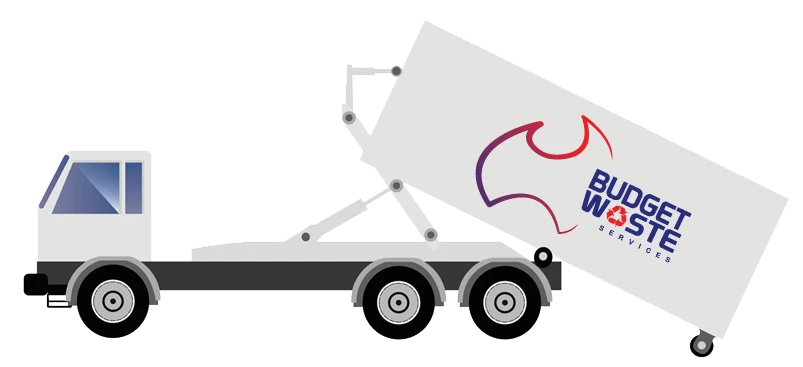
Hook Lift Bins Melbourne

Hook Lift Bin
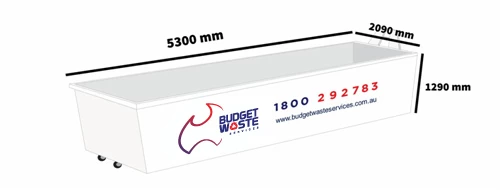
9 m³
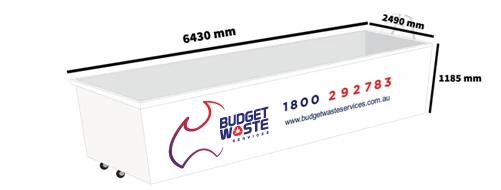
12 m³
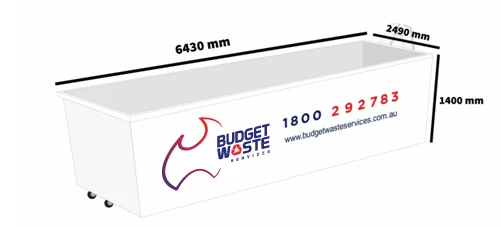
15 m³
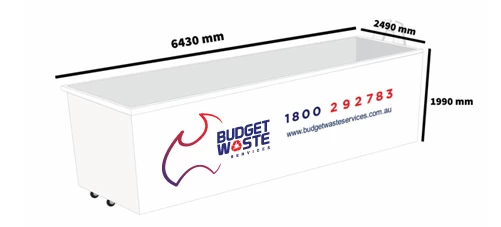
23 m³
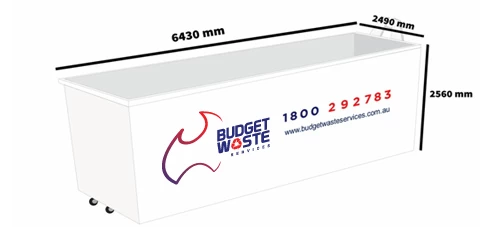
31 m³
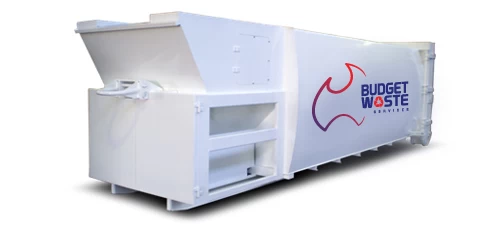
25 m to 31 m³ Compactor
What Is a Hook Lift Bin?
A hook lift bin is a large open or enclosed skip loaded onto a truck by a hydraulic hook arm. The truck reverses to the bin, hooks the frame and winches it onto the chassis, so the full bin is taken away and an empty one is left in its place rather than being tipped on site. Hook lift bins hold between 9 and 31 cubic metres, which makes them the largest containers in a standard commercial waste fleet.
Because the bin is exchanged rather than emptied in place, hook lift suits sites producing large volumes in bursts: construction and demolition work, factory clean outs, warehouse fit outs, and ongoing industrial production waste.
Hook Lift Bin Sizes
| Size | Roughly equivalent to | Typically suits |
|---|---|---|
| 9m³ | About six 1.5m³ front lift bins | Small construction sites, shop fit outs |
| 12m³ | About eight 1.5m³ front lift bins | Office refurbishments and strip out work |
| 15m³ | About ten 1.5m³ front lift bins | Mid size construction, factory clean outs |
| 23m³ | About fifteen 1.5m³ front lift bins | Large construction, bulky light waste |
| 31m³ | About twenty 1.5m³ front lift bins | High volume, low density waste |
| 25 to 31m³ compactor | Compacts on site, so considerably more waste per exchange | Manufacturing and distribution sites with steady high volume |
Which Businesses Use Hook Lift Bins?
Hook lift is used by construction and demolition contractors, manufacturers, warehouses and distribution centres, large retail redevelopments, and any site clearing bulk waste. It also suits businesses producing scheduled high volume production waste, where a compactor reduces the number of exchanges needed and lowers the cost per tonne.
Site Access and Delivery Requirements
A hook lift truck needs a firm, level area long enough to place and retrieve the bin, and clear overhead space for the hook arm to lift. In practice the truck needs room to reverse in a straight line and enough length in front of the bin position to complete the load. Soft ground, tight turning circles, overhead cables and height restricted entries all prevent delivery, so site access is worth confirming before the bin is booked.
Hook Lift or Front Lift?
Front lift bins hold 1.5 to 4.5 cubic metres and are emptied on site on a regular schedule, which suits ongoing weekly waste. Hook lift bins hold 9 to 31 cubic metres and are exchanged rather than emptied, which suits project work and bulk clear outs. If you are filling a front lift bin several times a week, or clearing a site rather than servicing one, hook lift is usually the lower cost option per tonne.

Supporting Smarter Recycling Practices
Hook lift bins can be allocated to a single clean stream such as timber, metal, concrete or cardboard, which is then recovered rather than landfilled. Separating bulk streams at the source is the most effective way to reduce landfill costs on a construction or industrial site.
Commonly used for: general waste collection
See also: Front Lift Bins | Rear Lift Bins
Frequently Asked Questions
Budget Waste Services supplies hook lift bins in 9, 12, 15, 23 and 31 cubic metre sizes, plus 25 to 31 cubic metre compactor units. A 9 cubic metre bin holds roughly the same as six 1.5 cubic metre front lift bins.
The terms overlap in everyday use. In commercial waste, a hook lift bin refers specifically to a bin loaded by a hydraulic hook arm, which allows for much larger containers than the chain and cable systems used on smaller domestic skips. Hook lift bins start at 9 cubic metres, well above typical domestic skip sizes.
The truck needs a firm level surface, a straight reversing approach, and clear space overhead for the hook arm. Soft ground, tight turns, low cables and height restricted entries will stop a delivery. Confirming access before booking avoids a failed delivery charge.
Hook lift bins are allocated to a specified waste type when booked, commonly general and construction waste, timber, metal, concrete or cardboard. Keeping a bin to a single clean stream usually lowers the disposal cost, because separated material can be recovered rather than sent to landfill. Hazardous and liquid wastes are handled separately under a different service.
A compactor makes sense when a site produces steady high volumes and exchanges are becoming frequent. Compacting on site fits considerably more waste into each load, which reduces truck movements and the cost per tonne. It suits manufacturing and distribution sites more than short term project work.
TRUSTED BY BUSINESSES ACROSS MELBOURNE
For over 20 years with superior service and rapid response times.

Budget Waste Services
Top-rated on Google Reviews
 62 Reviews








Get Started With a Tailored Waste Plan
Ready to streamline your waste services?